Air Cooler vs Liquid Cooler: Which One Is Better for Your Build?
Most builders start with the wrong question
Most advice lies.
I have watched too many builders throw money at a shiny 360 mm AIO because the photos looked “high-end,” only to bolt it into a restrictive glass case, feed it warm air, and end up with more pump noise, more cable clutter, and barely any real gain over a serious tower cooler. Why pay extra to cool the Instagram post instead of the CPU?
The real question is not “is liquid cooling better than air cooling?” The real question is whether your CPU’s actual heat output, your case clearance, your fan control, and your workload justify the extra complexity. If you skip that math, you are not choosing the best cooler for your PC build. You are buying decoration for a heat problem.
Before you buy anything, I would send readers through AceGeek’s thermal cluster in this order: understanding TDP before you buy a CPU cooler, how much cooling is enough for today’s high-TDP CPUs, and how to choose the right PC case for your build. Those three pieces fit this H1 because they tie watts, clearance, radiator support, and airflow together instead of pretending cooling exists in a vacuum.
The numbers are blunt.
Intel’s own spec page lists the Core i9-14900K at 125 W processor base power and 253 W maximum turbo power, while AMD’s Ryzen 9 9950X carries a 170 W default TDP and a 95°C max operating temperature. Those are not abstract spec-sheet ornaments. They are warning labels for anyone still pretending any cooler in any case will do the job.
Air cooling still wins more builds than people admit
Air still rules.
For the majority of mainstream gaming rigs and mixed-use desktops, a good air cooler is still the smarter answer because it is cheaper, easier to install, easier to clean, and less likely to turn one dead pump into a full-cooler replacement, especially when paired with a case that actually breathes. Why does the industry keep acting as if “expensive” and “better” are the same word?
An air cooler is brutally simple: copper base, heat pipes, aluminum fin stack, one or two 120 mm or 140 mm PWM fans, done. AIO liquid cooling adds a pump, cold plate, tubing, radiator, coolant, and more points where fit or noise can go sideways. Intel’s own overview of CPU cooler: liquid cooling vs air cooling lays out that trade clearly, and I agree with the part many marketers hate: simple has value.
What air coolers do better than the hype admits
Noise matters too.
In my experience, a strong dual-tower air cooler usually fails in a more civilized way: the fan gets noisy, you replace the fan, and you move on. AIOs do not usually die in a dramatic coolant horror movie. They die in the annoying real-world way, with pump whine, gurgle, or gradual performance drop that makes you second-guess the whole build. Isn’t that the failure mode most people actually live with?
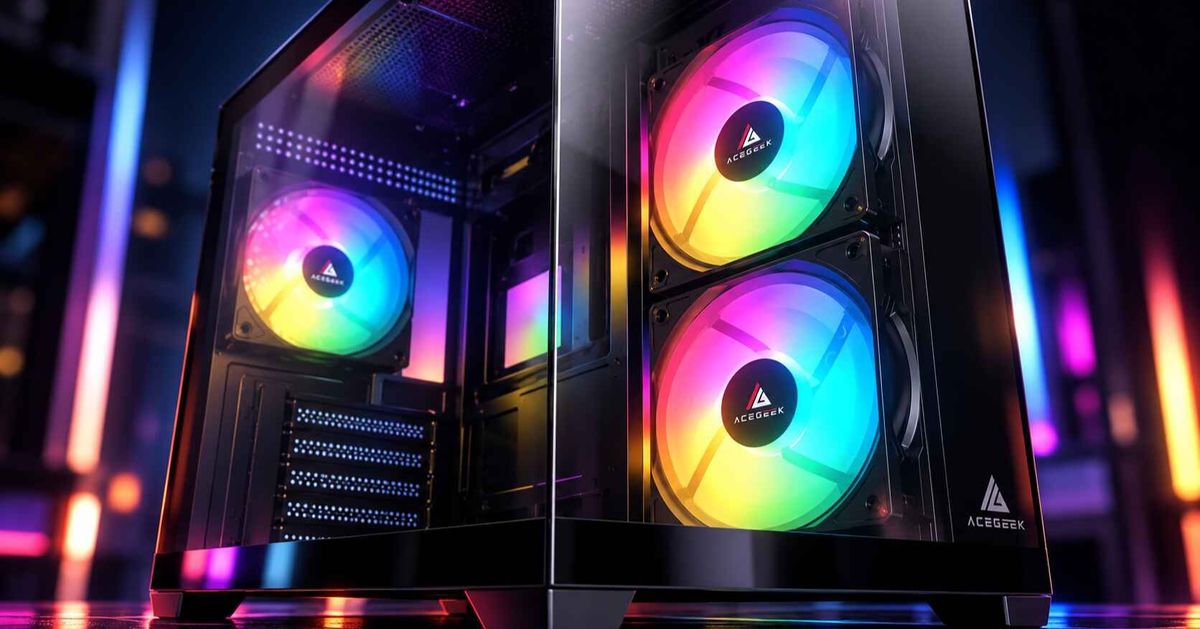
And here is the part new builders miss: the case often matters more than the cooler class. A well-ventilated chassis with honest intake area can make an air cooler look better than it “should,” while a restrictive front panel can make an expensive liquid setup look stupid. That is why front mesh vs tempered glass case design and how to balance CPU cooling and GPU airflow in the same system are not side reads here; they are part of the answer.
One case study matters.
In Puget Systems’ 14th Gen Intel power draw and cooling analysis, the Core i9-14900K at 253 W delivered about 8.5% more Unreal Engine CPU performance than at 125 W, with even larger differences showing up in some render-heavy tests. That matters because it proves the old lazy line—“a cooler is just about safety”—is wrong. Cooling changes performance once modern boost behavior gets involved.
Liquid cooling earns its keep when wattage gets stupid
Liquid has teeth.
Once you start pushing hot chips, sustained all-core workloads, or a chassis that cannot swallow a 165 mm tower cooler, an AIO stops being cosmetic and starts being a packaging solution with real thermal headroom, better socket-area clearance, and more flexibility about where the heat leaves the case. Is that overkill for a Ryzen 5 gaming box? Usually. Is it overkill for a 253 W Intel part under long renders? Not always.
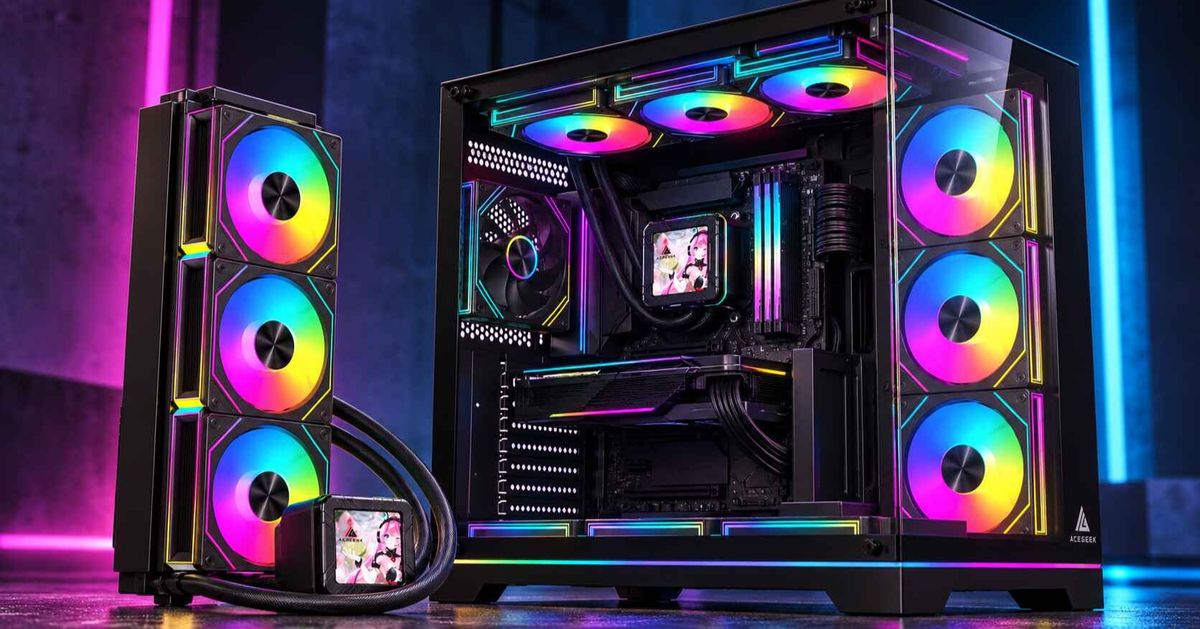
This is where air cooler vs AIO cooler becomes a serious question instead of a forum cliché. If you are building around a Core i9, a Ryzen 9, or a content-creation workstation that sits at high load for long stretches, a 280 mm or 360 mm radiator gives you more margin to keep clocks up while holding fan speed down. And if you are planning a more aggressive chassis layout, AceGeek’s how to plan a dual-radiator layout for high-TDP PCs is a natural follow-up.
The bigger signal is not subtle.
Uptime Institute’s 2024 Cooling Systems Survey found 22% of respondents were already using direct liquid cooling, while 61% were not using it yet but would consider it, and nearly half of current DLC users said less than 10% of their racks used it today. That is not a consumer PC survey, but it tells you something honest: once heat density gets high enough, liquid stops being a flex and becomes an operational decision.
Even giant vendors get humbled.
Reuters reported in November 2024 that Nvidia’s Blackwell AI chips were running into overheating problems in server racks designed to hold up to 72 chips, forcing rack redesign work at the exact moment customers wanted deployment speed. Different market, same physics. Heat does not care how much money the vendor spent on launch slides.
The math that actually decides the winner
Forget the aesthetics.
If you want to know whether liquid cooling vs air cooling is the better move, I would ignore 90% of the marketing copy and check six things: CPU wattage, case clearance, radiator support, intake quality, target noise, and whether your workload is brief and bursty or long and abusive. Isn’t that the boring checklist that saves the most money?
FactorAir CoolerLiquid CoolerMy blunt takeUpfront costUsually lowerUsually higherAir wins for valueInstallation complexityEasierHarderAir wins for first-time buildersPeak sustained heat handlingGood to very goodVery good to excellentLiquid wins on hot flagship CPUsNoise characterMostly fan noiseFan noise + pump noiseAir often sounds less irritatingRAM / motherboard clearanceCan be tight around tall RAMBetter socket clearanceLiquid wins in crowded socket zonesCase compatibility riskNeeds tower height clearanceNeeds radiator, tube, and mount clearanceTie, but check measurements carefullyLong-term failure chainMostly fansPump + fans + sealed loopAir is simpler to live withBest fitMainstream gaming, mid-range CPUs, budget-conscious buildsHigh-TDP CPUs, creator rigs, aesthetic-first builds with good radiator supportMatch the cooler to the heat, not to the trend
My blunt verdict on air cooler vs liquid cooler
Here is my answer.
For most builds, air cooling is better because the real bottleneck is usually bad case airflow, not the absence of liquid, and spending the same money on a better case, better fans, or a smarter airflow path often beats buying an AIO just to feel “premium.” Why solve the wrong problem elegantly?
For hot builds, liquid wins.
If you are running a top-end Intel chip near 253 W, a Ryzen 9-class processor under sustained all-core work, or a compact chassis where tower height becomes a real limit, liquid cooling gives you better thermal headroom and often cleaner fit around the socket. That is where air vs liquid CPU cooler stops being a style debate and becomes thermal math.
For gaming, the answer is more annoying.
Most people searching “best CPU cooler for gaming” expect a glamorous answer, but the hard truth is that many gaming PCs are constrained more by GPU heat, case intake, and acoustic goals than by raw CPU cooler ceiling, especially at 1440p and 4K where the graphics card does more of the suffering. So, for an air cooler vs liquid cooler for gaming PC decision, I usually tell people to fix the case first, then the fan layout, then the CPU cooler. Start with how to choose the right PC case for your build, then read how to balance CPU cooling and GPU airflow in the same system.
And yes, I am opinionated.
If your CPU is mid-range, your case has honest front intake, and your workload is mostly gaming, browsing, office work, and the occasional export, buy a serious air cooler and move on. If your CPU is a furnace, your workloads are long, and your case genuinely supports a 280 mm or 360 mm radiator without choking it, buy the AIO and do it properly. That is how to choose a CPU cooler like an adult.
FAQs
Is liquid cooling better than air cooling?
Liquid cooling is better than air cooling only when your build produces enough sustained heat, space pressure, or noise pressure that a radiator-based system gives you measurably better temperatures or lower acoustics under load; for mainstream gaming and mid-range CPUs, a strong air cooler is usually the smarter buy. I would not pay the AIO tax unless the heat load or the case layout makes the benefit obvious.
How do I choose a CPU cooler?
Choosing a CPU cooler means matching the CPU’s real power draw and boost behavior to your case clearance, motherboard socket, RAM height, radiator support, and target noise level, then buying the simplest cooler that can hold those temperatures without throttling during the longest workload you actually run. Start with TDP and real power, not brand hype.
Is an air cooler or AIO better for gaming?
For gaming, an air cooler is often better value because most game loads do not hammer the CPU as brutally as rendering, compiling, or heavy simulation, so the deciding factors become case airflow, GPU heat, and overall fan noise rather than maximum radiator size or cooler prestige. That is why I keep telling builders to audit the chassis first.
Do liquid coolers last longer than air coolers?
Liquid coolers do not automatically last longer than air coolers because an AIO adds a pump, sealed tubing, and coolant aging to the failure chain, while tower air coolers mainly depend on replaceable fans, which makes their long-term risk simpler even if their thermal ceiling is lower. Simpler hardware usually ages more gracefully.
What size AIO do I actually need?
A 240 mm AIO is the practical starting point for hotter mid-range CPUs, a 280 mm often gives the best balance of thermal headroom and noise when the case supports it, and a 360 mm is justified for high-wattage CPUs, sustained creator workloads, or builders trying to keep fan speed lower. Bigger is not better if the case starves the radiator.
Your next move
Stop buying by screenshot.
If you are still deciding between an air cooler and a liquid cooler, do three things before checkout: read understanding TDP before you buy a CPU cooler, confirm your case’s cooler clearance and radiator support, and map your CPU and GPU airflow together instead of separately. Then buy the cheapest cooler that honestly handles your real heat load, not your fantasy future overclock.
That is my verdict: air is better for most sane builds, liquid is better for a smaller group of hotter, tighter, or heavier-duty systems, and the builders who get the best results are the ones who treat cooling like system design instead of a beauty contest.